
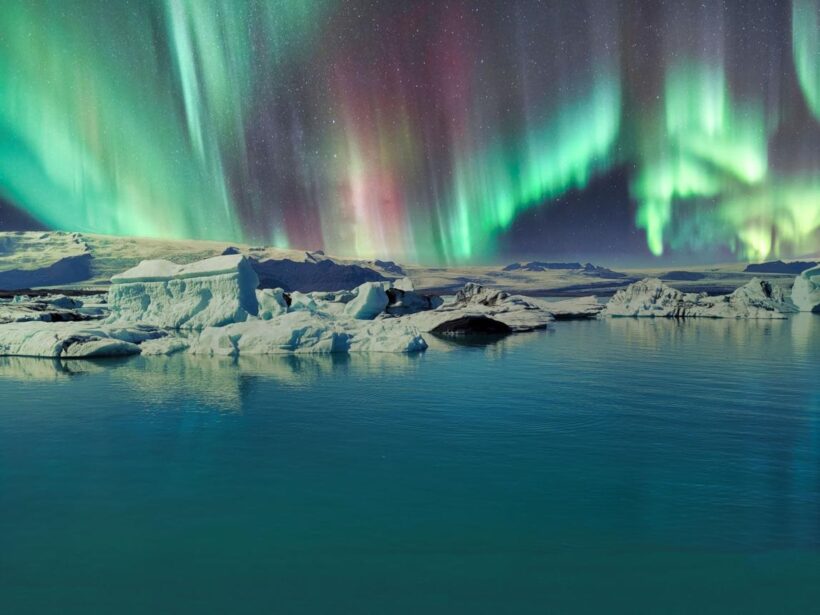
Everything You Need to Know About the Aurora Borealis — Where to See It, How It Forms, and the Best Time to Experience It
Northern Lights: The Magical Dance of the Arctic Sky
Few natural wonders on Earth are as mesmerizing as the Northern Lights. Known scientifically as the Aurora Borealis, these colorful waves of light illuminate the night sky in shades of green, purple, pink, and blue, creating a breathtaking spectacle that attracts travelers from around the world.
For many people, seeing the Northern Lights is a once-in-a-lifetime experience — a magical moment where nature feels almost unreal. But what exactly causes this phenomenon, where can you see it, and when is the best time to plan your trip?
What Are the Northern Lights?
The Northern Lights are a natural light display that occurs near the Earth’s polar regions. They appear when charged particles from the Sun collide with gases in Earth’s atmosphere.
These particles travel millions of kilometers through space as part of what scientists call the solar wind. When they reach Earth, the planet’s magnetic field guides them toward the North and South Poles. As the particles interact with oxygen and nitrogen high above the Earth, energy is released in the form of colorful light.
Different gases create different colors:
- Green — caused by oxygen and the most common aurora color
- Purple and blue — produced by nitrogen
- Red — a rarer color that appears at higher altitudes
The result is a constantly moving curtain of light that dances across the sky.
Where Can You See the Northern Lights?
The Northern Lights are most visible in countries located close to the Arctic Circle. Some of the best destinations include:
Iceland


Norway


Finland and Sweden


Canada and Alaska


When Is the Best Time to See the Northern Lights?
The aurora can appear at any time of the year, but it is only visible when the sky is dark enough.
The best season to see the Northern Lights is typically between September and March, when nights are longest in the Arctic regions.
Ideal viewing conditions include:
- Clear skies
- Minimal light pollution
- Strong solar activity
- Cold winter nights
The lights are usually most active between 9 PM and 2 AM, although they can appear earlier or later depending on solar conditions.
Tips for Watching the Aurora Borealis
If you want the best chance of witnessing the Northern Lights, keep these travel tips in mind:
- Stay at least 3–5 nights in an aurora region
- Check weather forecasts before going out
- Use aurora forecast apps to track solar activity
- Dress warmly — temperatures can be extremely cold
- Avoid bright city lights whenever possible
Patience is also important. Sometimes the lights appear suddenly and last only a few minutes, while on other nights they can dance across the sky for hours.
Why the Northern Lights Feel So Special
The Northern Lights are more than just a scientific phenomenon — they are deeply emotional and unforgettable. Across history, many cultures created legends and myths to explain them. Vikings believed the lights were reflections from the armor of the gods, while other northern communities saw them as spiritual signs from the sky.
Today, the aurora continues to inspire photographers, travelers, and dreamers from every corner of the world.
Whether you watch them from an Icelandic volcano, a Norwegian fjord, or a snowy forest in Lapland, the Northern Lights remain one of nature’s most extraordinary performances — a reminder of how beautiful and mysterious our planet truly is.