
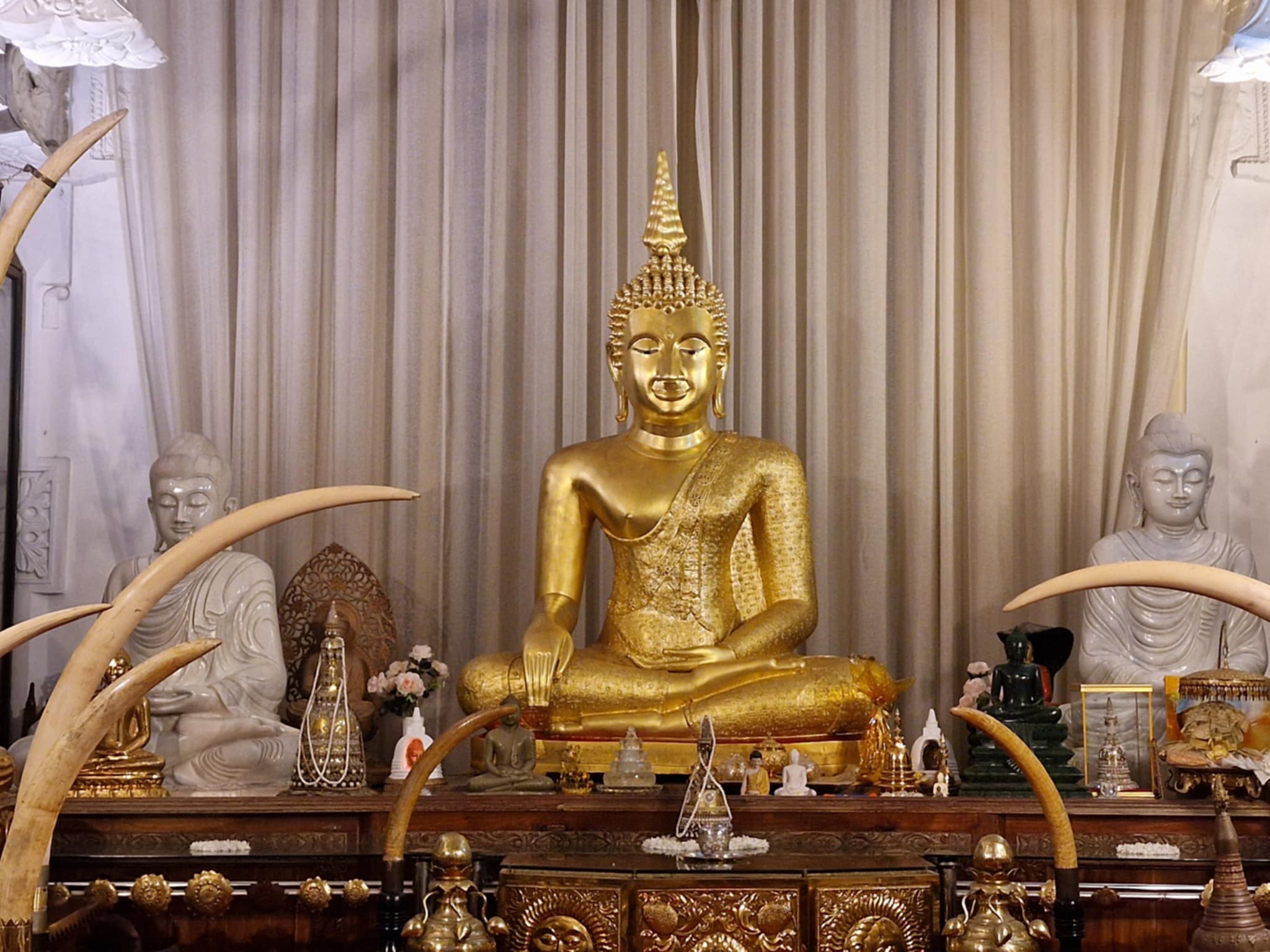
Temple of the Sacred Tooth Relic in Kandy: Legends, History, and a Complete Visitor’s Guide
In the heart of Kandy, the former royal capital of Sri Lanka, lies one of the most venerated sanctuaries in Buddhism — the Temple of the Sacred Tooth Relic, locally known as Sri Dalada Maligawa. Situated on the shores of Kandy Lake, within the grounds of the old Royal Palace, the temple houses a relic believed to be a left canine tooth of the Buddha. Over time, both fascinating legends and dramatic pages of history have been woven around this sacred object, making the site not only a place of pilgrimage but also a symbol of Sinhala identity and sovereignty.
The Founding Legend of the Relic
According to legend, after the cremation of the Buddha, his disciples preserved several fragments of his body, including a tooth. In the 4th century, Princess Hemamali and her husband Dantha brought the relic to Sri Lanka, hiding it in the princess’s hair bun to protect it. From that moment, the relic became both an object of veneration and a political symbol. It was believed that whoever possessed the tooth had the divine right to rule the country.
Throughout history, the relic was moved from one capital to another — from Anuradhapura to Polonnaruwa, and later to Kandy — both to protect it from enemies and to legitimize the authority of the kings who possessed it.


Architecture and Layout
The present temple, built in the Kandyan architectural style, features refined wooden carvings, gilded roofs, and ornamental details, and is now part of the UNESCO World Heritage. The complex includes several important structures:
- Vadahitina Maligawa – the inner chamber where the relic is kept inside seven golden caskets adorned with precious stones;
- Hevisi Mandapaya – the drummers’ hall, where daily rituals are performed;
- Pallemaluwa – the lower level of the temple;
- Paththirippuwa – the octagonal pavilion, added in the 19th century and originally designed for royal leisure.


A History of Conflict and Survival
The relic’s history is filled with conflict and attempts at destruction. During the colonial period, the Portuguese claimed to have burned the tooth in Goa, but local chronicles maintain that what was destroyed was only a copy — the real relic had been hidden by monks.
In modern times, in 1998, the temple was severely damaged in a bomb attack by the separatist group LTTE, yet the relic remained unharmed — a fact many devotees interpreted as a sign of divine protection.
Visiting the Temple
Visiting the temple is a unique experience.
The site is open daily, approximately from 5:30 a.m. to 8:00 p.m. The most significant moments are the daily rituals, known as darshan, held three times a day:
- Morning: 5:30–6:45
- Midday: 9:30–11:00
- Evening: 6:30–8:00
During these times, pilgrims and visitors may approach the inner chamber where the relic is kept, although it is not directly displayed, being protected inside the caskets.
Every Wednesday, a special ritual called Nanumura Mangallaya takes place, during which the relic is symbolically “bathed” with scented water and flowers. This water is later distributed among devotees, who believe it to have healing properties.
Practical Information
The entrance fee is about 2,000 LKR (approximately 6 USD) for foreign visitors, and tickets can be purchased from ticket machines within the temple grounds.
Visitors are expected to observe the following rules:
- Dress modestly, covering shoulders and knees;
- Remove shoes before entering;
- Maintain silence and respect during rituals;
- Photography is allowed only in designated areas.
For a full experience, including the on-site museums, it’s recommended to allow 1–2 hours for your visit.
The Esala Perahera Festival
A highlight of the year is the Esala Perahera Festival, held annually in July or August. During this grand celebration, the relic is carried through the streets of Kandy on the back of a magnificent elephant, accompanied by dancers, musicians, and priests in a dazzling procession.
Traditionally, the public appearance of the relic during this festival is believed to bring rain and fertility to the land, giving the event both religious and agricultural significance.
Relics in Buddhism and Christianity
When comparing Buddhist and Christian traditions, notable similarities emerge. In both religions, relics serve as bridges to the sacred and as symbols of spiritual or political legitimacy.
In medieval Christianity, cathedrals were often built around saints’ relics, drawing pilgrims from across Europe. Similarly, Buddhist relics — such as the teeth, bones, or hair of the Buddha — became the focal point of magnificent stupas and temples.
The main difference lies in presentation: Christian relics were often displayed in elaborate reliquaries, while Buddhist relics are typically enshrined and hidden, revealed symbolically only during processions.
Other Notable Buddhist Relics
Beyond Kandy, other sacred relics are venerated across the Buddhist world:
- At Famen Monastery in China, fragments believed to belong to the Buddha are preserved;
- At Shwedagon Pagoda in Myanmar, it is said that strands of the Buddha’s hair are enshrined;
- In Singapore, the Buddha Tooth Relic Temple is a modern structure dedicated to another sacred tooth.
Although the authenticity of these relics is sometimes debated, for the faithful their spiritual value is rooted in tradition and devotion.
A Living Symbol of Faith and Heritage
Today, the Temple of the Sacred Tooth Relic remains not only a religious center but also a symbol of national identity and cultural resilience in Sri Lanka. Visiting it means stepping into a space where legend intertwines with history, and where faith continues to shape the present.


For travelers, it offers an experience that blends architectural beauty, ritual solemnity, and the vibrant atmosphere of a place where the sacred can be felt in every step.